TL;DR
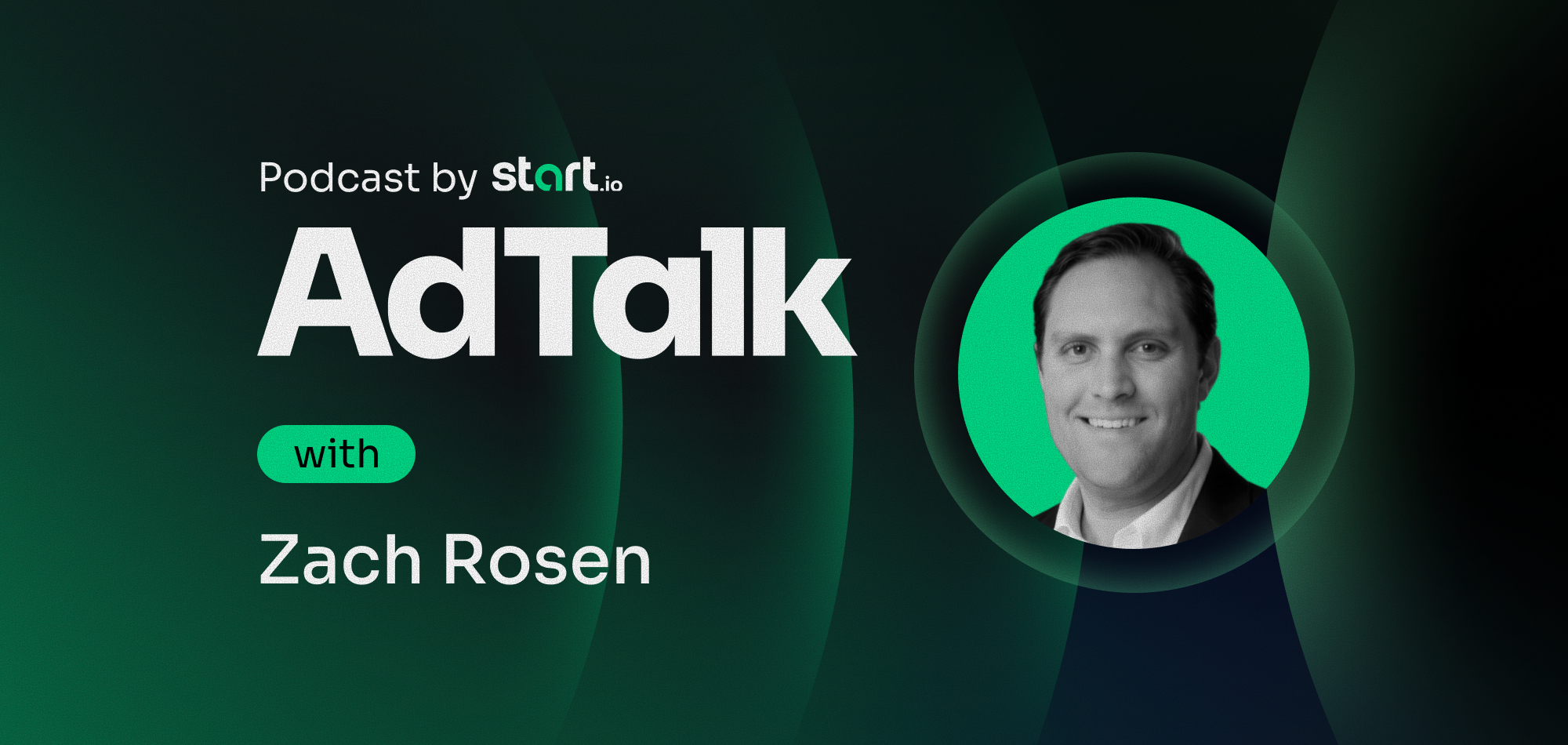
Zach Rosen from Multilocal shares insights from his journey in AdTech, exploring the power of community, the future of programmatic advertising, AI, and the importance of transparency. He discusses why precision and performance should take priority over cost efficiency, how curation intelligence is transforming media decisioning, and why people and strong industry relationships remain key to driving innovation and growth.
Zach Rosen, SVP, BD & Partnerships at Multilocal
🎧 Audio version is available exclusively on Spotify:
1. The Origin Story
I grew up in a family of creatives – an entertainment editor at Variety, an NBC producer of the Howdy Doody show, an Oscar-winning Hollywood costumer. Storytelling was always our family language. So, when the opportunity came to work on the NBCUniversal backlot with Elisabeth Murdoch’s Shine Group – the production company behind MasterChef, The Biggest Loser, The Office, and Ugly Betty – it felt like a gravitational pull.
My work there focused on branded content, which at the time was still a relatively new frontier in unscripted television. I was integrating top sponsors directly into the storylines of those shows – not as commercial interruptions, but as narrative elements that helped brands connect with consumers in an authentic way.
That’s where the spark happened: seeing the extraordinary value that gets created when advertising, entertainment, and technology intersect in the right way. I’ve been chasing that intersection ever since.
2. The Hidden Weapon
Community. It is one of the most powerful strategic assets in this industry. I’ve spent my career trying to be deliberate about the rooms I walk into and the relationships I invest in. Early in my career I worked with Index Exchange from my post as a partner manager at Cox Digital Solutions. I developed a working relationship with the founding team in the early days of programmatic. After building together as partners, an opportunity opened for me to take a role as their first US employee in 2013. There was very little brand recognition in the New York market, but building the market presence in those early days changed my entire trajectory. That one connection opened nine years of building publisher partnerships across eleven global markets.
The lesson: your next great opportunity is almost always inside a relationship you haven’t fully invested in yet.
3. The Industry Myth
That programmatic is primarily a cost-efficiency play. It isn’t, or at least, it shouldn’t be. The most sophisticated buyers and sellers I’ve worked with understand that the real value of programmatic is precision and performance. The problem is that too much of the industry has optimized for the cheapest impression rather than the most valuable one. This race to the bottom is draining dollars from the open web, undercutting publishers, and delivering a negative experience for consumers.
Efficiency is a means, not a mission.
4. Top Priorities
Right now, my top priority is about delivering curation intelligence as broadly as possible through to the market. I joined Multilocal because we are solving real and urgent problems by bringing media planning and decisioning into the bid stream across the broadest set of SSPs and data partners in the industry.
This solution helps agencies make smarter decisions about how they invest their dollars more efficiently while driving the best possible results.
It helps publishers expand their audiences and revenue opportunities outside of their owned and operated inventory, expanding their offering, and improving the ways they engage with their buyers.
It helps data providers like Start.io build their media business on top of their unique audiences, driving frictionless activations and greater results for their clients.
5. The Success Blueprint
The most overlooked best practice? Taking the meeting. The biggest risk in this industry isn’t falling behind on tactics – it’s failing to prepare for what’s coming next. It’s easy to get locked into the present while the next wave of innovation is already building somewhere else. The leaders who’ve shaped this industry were never just great operators. They were the ones in the room asking: “Are we prepared for what’s coming?”
Make it discipline. Take the meeting with the new startup in the room. Ask the uncomfortable questions. Prioritize being in spaces where the future is being built.
7. The Real-World Win
Multilocal’s intelligence engine, cureon, is the best case-study I can offer right now. We launched it in January at CES. Simply put, it opens-up an intelligence and decisioning layer in the bid stream to help marketers make better decisions about how to invest their campaign dollars — media planning, activation, and optimization in a single, unified tool. In an industry that is drowning in complexity, it cuts through the noise and tells you what actually works. We’ve worked with brands like Coca-Cola, Canada Goose, and American Express – helping them reach audiences in markets they struggled to crack before – and we’re consistently seeing performance improve by 40% while reducing costs by 37%. Those aren’t small tweaks. It’s a fundamentally better way of operating.
8. AI Beyond the Hype
AI will be a great tool as long as we keep people at the center of the strategy. People first, people last, with AI in the middle of the process removing manual friction in the supply chain.
Today, running a cross-channel campaign requires different tools, workflows, and dashboards for every channel. Agentic advertising changes this by automating elements of inventory and data discovery, planning, and activation. This isn’t hype because we’ve already seen the first fully autonomous campaigns go live over the last year. While we’re still testing, what we learn as an industry will set the foundations for massive change in the next decade.
9. The Growth Engine
The biggest growth engine isn’t going to come from a single tech platform. It’s not going to come from an agentic activation either. Our collective success and growth as an industry will come from our people. Every shift that has advanced our industry started with someone who challenged the status quo and pitched an idea that made people a little uncomfortable.
Too often the best idea in the room belongs to someone who isn’t in it. And the pandemic made it harder for the next generation because the hallway conversations and events where relationships were formed had disappeared.
We have to be deliberate about creating what used to happen by accident. We must work harder to foster those moments of serendipity that bring people and ideas together.
The good news is that fostering talent doesn’t require a formal program or a big budget. It can happen in micro moments, those small ordinary gestures where a breakthrough can start. Maybe it is introducing a founder with a great product to a seller who knows exactly who needs it or forwarding the resume to the hiring manager.
So, my bet is on the people. The next breakthrough is probably in someone’s head right now, waiting for a seat at the table!
10. The New Frontier
As an industry, we need to get back to the central theme of transparency. It’s not exactly a new topic, but it’s something I keep coming back to because a lack of transparency still plagues our ecosystem. I talk to some of the industry’s smartest operators on almost a weekly basis who are unclear about the fee structures of some of their partners and lack insight into what they are buying and where. Too many dollars are still being extracted from the ecosystem in ways that hurt publishers, limit the spending power of marketers, and create a bad consumer experience. Can your partners clearly articulate their commercial models? Are they contributing value to the consumer’s experience, to the publisher, and to the marketer? Or are they simply extracting value from the marketplace? Greater transparency into media quality, supported by independent quality signals, is central to our focus on Media Quality Intelligence (MQI). This helps buyers make better decisions about what to buy, not just what to avoid.
11. The Influencer
Like manty of you, I recently sat on the edge of my cinema seat for three hours at You Can See Everything, the Nathan Fielder documentary documenting former Theranos founder Elizabeth Holmes and her journey in the days leading up to her prison sentence. Elizabeth Holmes is the ultimate business “anti-influencer”, but there are some important themes around business ethics that have stuck with me!
As a fast-growing and global company operating across 4 continents, our reputation and approach to doing business are the most important assets we have in gaining client trust. How do we build a company culture that cultivates an environment of trust, and prioritizes doing the right thing over anything else? Fostering and maintaining that culture is something I think about often as we continue to expand.
12. Anything Else?
You can probably sense by now that community is an important thread – which pulled me into ad tech in the early Index days and has continued in the years since! In the last few years, I have been focused on fostering the community that didn’t exist, and that I needed most when I was starting out. Last year I launched Supernova PRIDE, the industry’s first-ever Pride summit at Cannes Lions. When brands and agencies were pulling back rainbow logos under political pressure, we brought ten sponsors, 180 attendees, and 15 of the industry’s leading LGBTQ+ voices to a main stage on the Croisette to have real conversations – on AI ethics, commerce media, fandom, and what inclusive leadership actually looks like in practice.
One summit isn’t a movement. The goal is to show up at every tentpole, every boardroom, every moment where LGBTQ+ leadership belongs, with real funding, accountability, and a blueprint for change.